Lot I
Antique & Estate Furniture
in Delray Beach
Mahogany, walnut, and period case pieces.
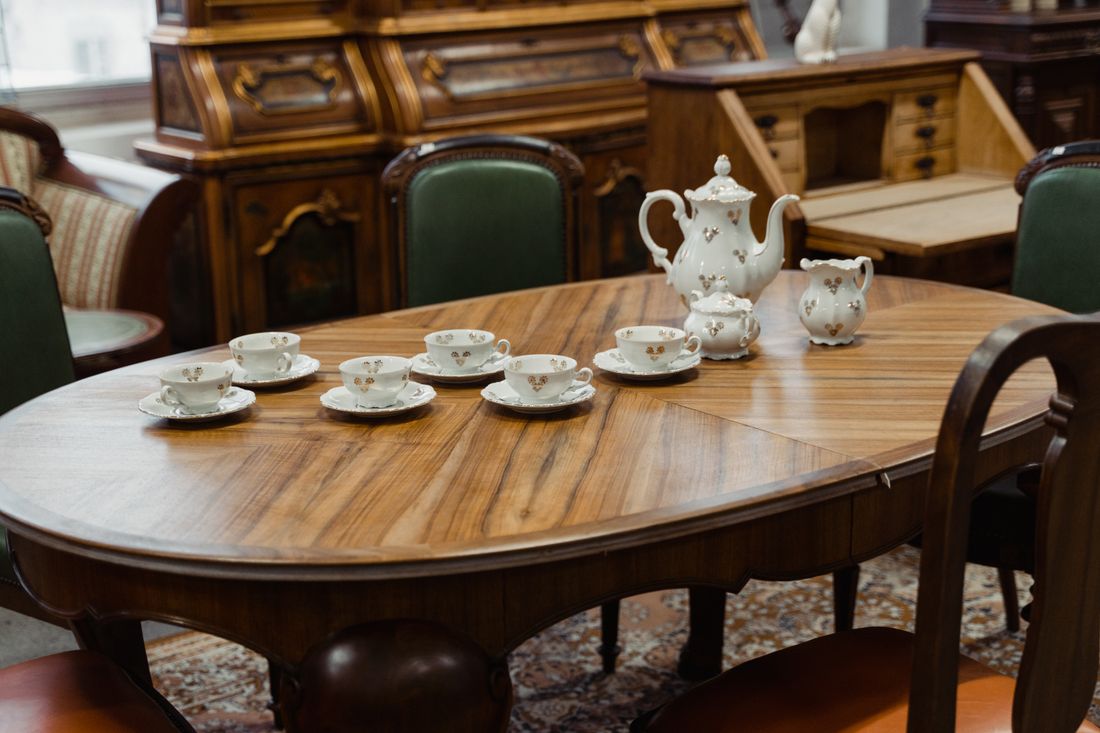
A good case piece gives itself away the moment a drawer comes out. Before we ever talk price, we read the piece the way a conservator would — the joint, the saw, the secondary wood, the shrinkage, the hardware. Here is the same field knowledge we bring into a Delray Beach home, so you can see what we are actually looking at.
What we look for
- Georgian, Victorian, and Mid-Century Modern pieces
- Signed or labeled cabinetmakers
- Dressers, secretaries, highboys, dining suites
- Original finish and hardware (we do not mind honest wear)
How to date antique furniture — the markers we read first
Style tells you the look of a period; construction tells you the truth. We weigh both. The American style periods give the broad frame:
- William & Mary — 1690–1720
- Queen Anne — 1720–1750
- Chippendale — 1750–1780
- Federal — 1780–1840
- Victorian — 1840–1900
- Arts & Crafts — 1910–1925
- Art Deco — 1920–1940
Then we turn the piece over, because the back and underside were never meant to be seen — and never faked. A few of the tells that settle a date fast:
- Dovetails. Hand-cut dovetails are slightly irregular and uneven, each one cut by eye. Perfectly uniform, evenly spaced dovetails are machine work, which points to the later nineteenth century and after.
- Saw marks. Straight, up-and-down saw marks are early. Curved, circular-saw marks come in with the mid-1800s and only get more common after.
- Plywood. Plywood on a back panel or drawer bottom means the piece was made in the 1930s or later — plywood simply was not available before then.
- Joinery. Mortise-and-tenon joints were standard by the 1700s; the cut of the joint, the shrinkage across the grain, and the oxidation of the wood all have to agree.
No single clue dates a piece. We combine the wood, the hardware, the finish and the construction — because a genuine antique is consistent all the way through, and a married or restored piece is not.
The science most buyers (and most dealers) never mention
This is where we go further than a quick once-over. Museums and conservation labs settle questions of age and authenticity with hard science, and the same principles inform how we value a serious piece.
Tree-ring dating (dendrochronology). Every ring in the wood is a year. By matching a board’s ring pattern to a regional master chronology, specialists can date when the tree was felled — and studies of painted furniture have found an average gap of only about 14 years between that last ring and the finished piece, the time it took to season, store and shape the wood. That turns a vague “nineteenth century” into a real window. It can even be done without taking the piece apart: X-ray CT scanning has read the rings straight through paint and joined panels, in one case uncovering a hidden double panel on a work from Rubens’ studio.
Where the wood came from. Oak in fine European furniture frequently traces to Baltic timber — in one large study of Flemish panels, over 70% of the planks were Baltic oak. Provenance like that is part of what separates a fair offer from a guess.
Reading the species itself. Telling walnut from mahogany from a tropical look-alike used to be slow, expert-only work. Conservation scientists now pair X-ray fluorescence with neural networks to identify wood species at around 99% accuracy across dozens of specimens. We do not need a lab for most pieces — but knowing how the lab gets to the answer is exactly why our appraisal is built on evidence, not a gut feeling.
What actually drives the value
- Maker & signature. A labeled or stamped cabinetmaker changes everything. We check the back, drawer sides, and underside for marks first.
- Originality. Original finish, original hardware, and no later marriage of parts carry a real premium. Over-restoration can quietly cut a piece’s value in half.
- Period & rarity. An honest Federal or earlier piece in good order is scarce; most of what turns up is Victorian or Colonial Revival, which we also buy — fairly, and for what it is.
- Wood & craftsmanship. Solid figured mahogany, walnut and the quality of the joinery matter far more than size.
- Condition & provenance. Structural integrity, honest wear, and a known history all add up.
Whatever the verdict, you hear it straight. If a piece is worth more to your family than to the market, we will tell you that too.
Not sure if your piece fits? Text a photo to (561) 465-3536 — we will tell you honestly and for free, with no obligation to sell.
Questions
Selling antique & estate furniture in Delray Beach
How can I tell if my furniture is a genuine antique or a reproduction?
Turn it over. Hand-cut, slightly uneven dovetails, straight up-and-down saw marks, honest shrinkage across the grain, and oxidized unfinished wood on the back all point to real age. Perfectly uniform dovetails, circular-saw marks, or plywood on the back point to the twentieth century. We read several of these together — a real antique is consistent throughout.
Does a refinished piece lose its value?
Often, yes. Original surface and original hardware carry a premium, and heavy refinishing or replaced parts can reduce value significantly. Before you strip or "fix" anything, send us a photo — sometimes the most valuable thing you can do is nothing.
Do you buy Victorian and Colonial Revival furniture, or only earlier pieces?
Both. Earlier Federal, Chippendale and Queen Anne pieces are rarer and bring more, but we actively buy Victorian, Arts & Crafts, Art Deco and quality revival furniture across Delray Beach and Palm Beach County — and we pay fairly for exactly what it is.
How do experts date wooden furniture so precisely?
For important pieces, tree-ring dating (dendrochronology) matches the wood’s growth rings to a regional record to find when the tree was felled, usually within a decade or so of when the piece was made. It can even be done non-invasively with X-ray scanning. For everyday appraisals we rely on construction, wood, hardware and finish — the same evidence, read by hand.
Will you come to the house for a large piece or a full room of furniture?
Yes. For furniture and full estates we visit the home anywhere in Delray Beach and Palm Beach County, appraise each piece on the spot, and pay the same day for what we buy. For a single item, a text photo is enough to start.
We also buy